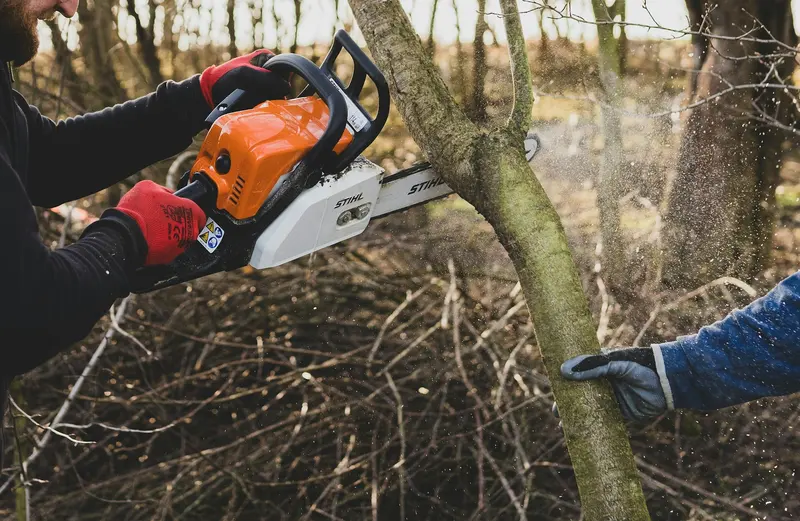
Say you run a two-person operation. You climb, your brother-in-law drags brush, and some days you have a friend help. The work is growing. You keep turning down jobs because there are not enough hands. It is time to hire a real groundsman, someone who shows up every day.
A groundsman works on the ground while the climber is in the tree. They drag and feed brush, run the chipper, keep the work zone clear and tidy up at the end. A good one makes the whole crew faster and safer. A bad hire costs you time, money and sometimes more.
This post is general advice. Employment and pay rules depend on your state, so check with your state labor office, your insurer and an accountant.
What a groundsman does
Be clear about the job before you write the ad. Here is a common split. Change it to fit your company.
| Task | Groundsman | Climber |
|---|---|---|
| Drag and sort brush | Yes | No |
| Feed the chipper | Yes, once trained | No |
| Watch the work zone and keep people back | Yes | Shares |
| Handle ropes at the base | Once trained | Directs |
| Tie in and cut in the tree | No, not at the start | Yes |
| Load and secure the truck | Yes | Shares |
| Final cleanup and raking | Yes | Shares |
Notice that the new hire does not climb or run a saw on day one. Training comes in steps. Our hiring and crews guide talks about how to grow people into bigger roles.
Know the full cost first
The hourly wage is not the whole cost. You may also pay payroll taxes, workers’ compensation insurance, uniforms, boots, PPE, truck time and your own time to train them.
Before you post anything, run the numbers with the hiring cost calculator. Enter your own wage idea and see what the real monthly cost looks like. The workers’ comp estimator helps you plan for insurance. Both give estimates, not quotes, so call your insurer for the real figure.
Then check whether the new person pays for themselves. If a groundsman lets your crew finish one more job a week, work out what that job is worth. The crew day rate calculator can help you see it. These are your numbers, so be honest with yourself.
Where to find a groundsman
Think about where reliable people already are.
- People you know. Ask your crew, family, neighbors and customers who would be a good fit. A referral comes with a built-in reputation.
- Local job boards and community groups. Post a clear, honest ad (see below).
- Trade and technical schools. Some have landscaping or forestry programs where students look for part-time work.
- Other outdoor trades. Landscaping crews, lawn care helpers and construction laborers already know hard outdoor work.
- Your own website. A “Join our crew” page shows up when people search for work near you. Our tree service website checklist covers what to put on your site.
What to look for
Skills can be taught. Habits are harder. When you meet a candidate, look for:
- Shows up on time to the interview.
- Has reliable transport to get to your yard.
- Is okay with hard physical work outdoors in all kinds of weather.
- Listens, asks questions and says “I don’t know” when they don’t.
- Treats you and your equipment with respect.
Interview questions
Keep it relaxed and practical. Here are some questions to try. They are examples, so adapt them.
- What did you do at your last job, and why did you leave?
- Tell me about a time you had to work hard in bad weather.
- How do you get to work? What happens if your ride falls through?
- Are you comfortable lifting and dragging heavy brush all day?
- If a coworker is doing something unsafe, what do you do?
- What would you want to learn in your first three months?
- What days or hours can you not work?
Some interview topics, like age, health, family plans or religion, can be restricted by law. If you are unsure what is allowed, ask your state labor office or an employment lawyer.
Write an honest job ad
Short and clear works best. Include:
- The title (Groundsman / Tree Crew Helper).
- What the work is, in a few lines.
- The pay or pay range. Only publish a number you will really pay.
- Hours and days, and whether overtime is possible.
- What training you provide.
- How to apply: a phone number to text, or a simple form.
Do not promise “great career growth” if you cannot back it up. Honesty at this stage saves you a quick quit later.
The first week and the first month
A new hire should know what is expected. Write it down.
| Time | Goal |
|---|---|
| Day 1 | Tour the yard and truck. Safety talk. Gear check and PPE fit |
| Days 2-3 | Shadow the crew. Learn the work zone and signals |
| Days 4-5 | Brush handling and cleanup, with a lead watching |
| Weeks 2-3 | Chipper training, step by step, with a trained person |
| Week 4 | Sit down, talk about what is going well, and what to improve |
Follow your own training program, your insurer’s rules and official safety standards. Our job site safety guide is a good starting place.
Hiring checklist
- I know the real monthly cost, from the calculators.
- I wrote down what the groundsman will and will not do.
- I checked workers’ comp and payroll rules with my insurer and accountant.
- I wrote an honest ad with a real pay range.
- I have interview questions ready.
- I planned a trial week and a first-month list.
- I have PPE and boots ready on day one.
Do not let the phone suffer when you grow
Here is something owners miss. When you hire a crew member, you are out on more jobs, and the phone gets less attention. According to Invoca, about 27% of calls to home-service businesses go unanswered, and under 3% of those callers leave a voicemail. More crew means more time in the field. Pair your hire with a way to catch calls, like our AI receptionist or missed-call text-back. The comparison of an AI receptionist and a human one can help you choose.
What to do next
Try it: open the hiring cost calculator, enter a wage, and see the full monthly cost before you post the ad. Then check the pricing page if you want to see what a phone system costs next to a new hire. If you want us to look at where your calls are being lost, you can get a free audit.