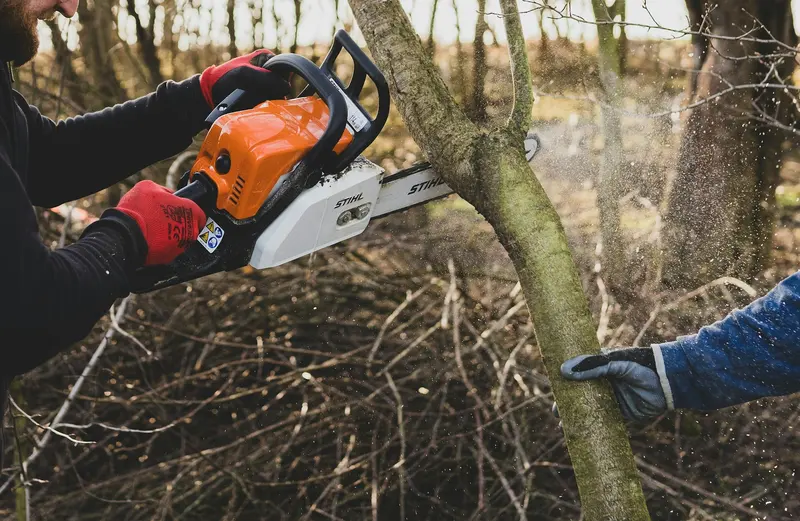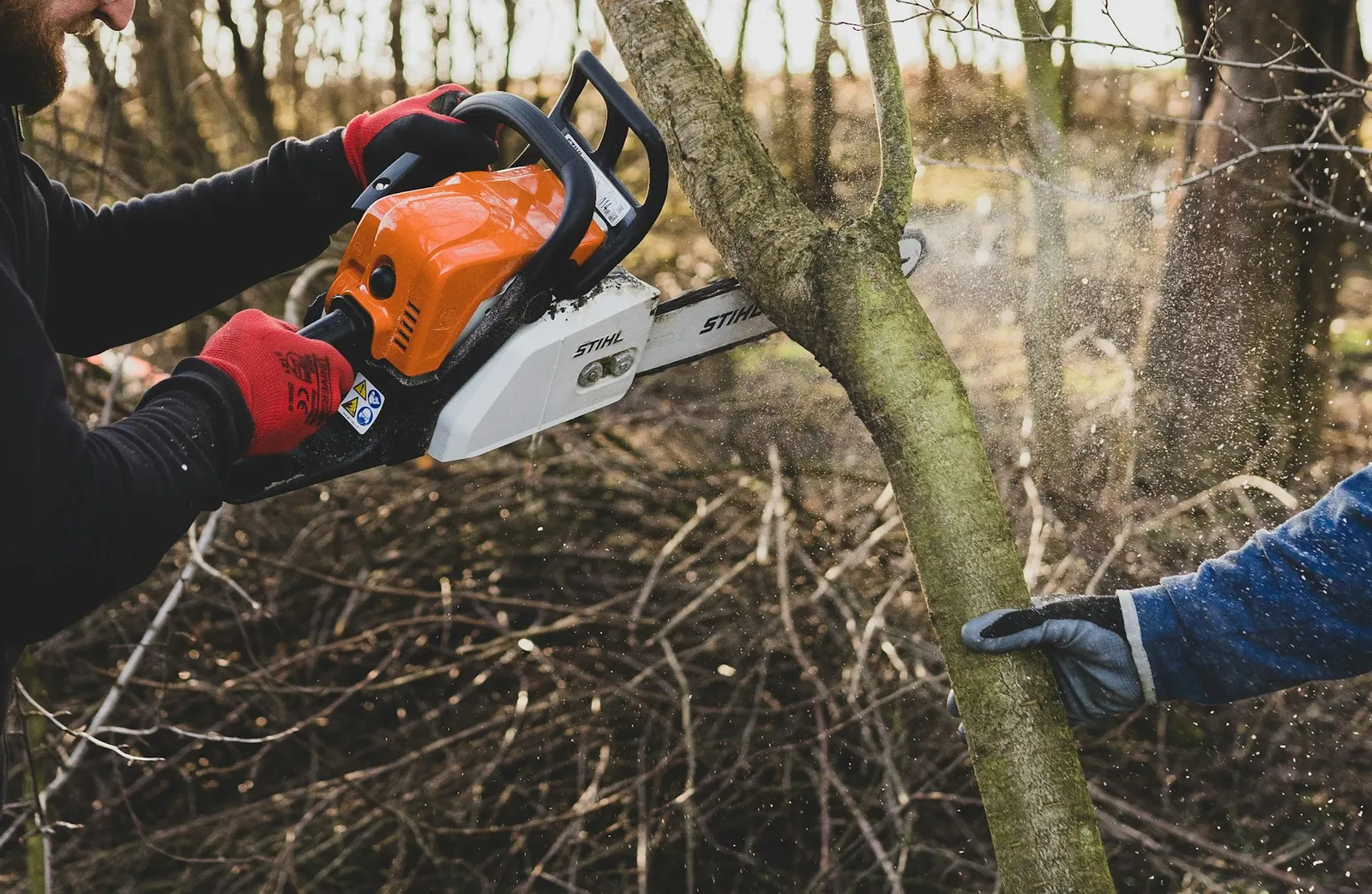
The truck is parked. The coffee is still warm. The climber is already looking up at the tree, the groundsman is pulling out the rope, and nobody has said a word about the power line that crosses the back corner of the yard. One minute of talking now can save a very bad day later.
A short safety talk before the work starts is a habit many good crews share. It does not need slides or paperwork. It needs five minutes and a clear order.
This post gives you a format. It is not a safety manual and not a replacement for proper training. Follow your own training, your insurer’s rules, your state’s rules and official standards. For a bigger picture, see our job site safety guide.
Why a talk, and why every job
Every site is different. The same crew can do the same type of tree on Monday and Tuesday, and the hazards are not the same. A neighbor’s car, a swing set, a wet slope, a hidden wire. The talk makes you look before you start.
It also does something else. It shows the newest person on the crew that speaking up is normal. A new groundsman who is afraid to ask a question is a risk to everybody.
The five-minute format
Use the same order each time. A fixed order is easy to remember and easy to teach.
| Minute | Topic | The question to answer |
|---|---|---|
| 1 | The job | What are we doing here today, and who is doing what? |
| 2 | The site | What can hurt us or the property? Lines, slopes, fences, pets, traffic |
| 3 | The plan | Where is the drop zone? Where do we put the truck and the chipper? |
| 4 | The gear | Is PPE on and in good shape? Is the equipment checked? |
| 5 | The stop and the help | Who can call a stop? Where is the first aid kit? Who calls for help? |
Walk the site together if you can. Pointing at things beats describing them.
What to say in each minute
Minute 1: The job
State the job in one sentence. “We are removing the oak in the back, taking it down in sections, and chipping the brush.” Then name roles: who climbs, who handles the ground, who watches the work zone.
Minute 2: The site
Look for the usual suspects:
- Power lines and service drops
- Structures, fences, cars, play sets, pools
- Slopes, wet ground, loose footing
- Dead or damaged branches that look unstable
- Traffic if you are working near a road
- People and pets nearby
If you see anything that worries you, say so, and decide what to do about it. Power lines are a special case. Stay clear and follow your training and your utility’s rules. Do not guess.
Minute 3: The plan
Agree on the drop zone and the exit path. Agree on signals if it is noisy. Agree on where nobody stands. Make sure the homeowner knows where to stay.
Minute 4: The gear
A quick look at each other’s PPE. Helmets, eye and ear protection, gloves, boots, chaps where your rules call for them. Check that saws, ropes and chippers are in working order. If something is damaged, fix or replace it, or do not use it.
Minute 5: Stop and help
Say it out loud every time: “Anyone can call a stop. If you are not sure, say stop.” Then ask: where is the first aid kit, who calls 911, and what is the address to give? The address matters. In an emergency the person calling may be shaken and forget it.
Make it short, and make it yours
Five minutes is a target, not a rule. A simple trim job may need two minutes. A crane job needs more time and a larger plan. The point is that you do it every time.
Keep the language simple. If you read a script word for word, nobody listens. Use your own voice.
Let different crew members lead the talk. When a new person runs it, they learn the habit, and the rest of the crew learns how they think.
Keep a record
Notes help you remember what you said, and they help if a question comes up later. Keep it simple:
- Date, address and crew members
- The hazards you named
- The plan in one or two lines
- Who attended
A photo of the site before you start also helps. Our job photo checklist shows what to capture. Talk with your insurer about what records they like to see. This is general information, not legal advice.
Checklist for the talk
- Everyone is present, no phones in hand.
- The job and roles are stated in one sentence each.
- Hazards are named: lines, slopes, structures, people, pets.
- The drop zone and exit path are agreed.
- PPE and gear are checked.
- “Anyone can call a stop” is said out loud.
- First aid kit location and the site address are known.
- A note and a photo are saved.
Use the talk to plan your day, too
A good morning talk starts the day with a clear schedule. If you are running two crews, the crew schedule planner helps you see who is where, so nobody is rushed or short-handed. Rushing leads to shortcuts, and shortcuts lead to injuries.
While your crew is on site, your phone still rings. According to Invoca, about 27% of calls to home-service businesses go unanswered, and under 3% of those callers leave a voicemail. A crew focused on safety should not have to dig out a phone mid-cut. That is the job of an AI receptionist or a missed-call text-back, so your crew can keep their eyes on the work.
Show customers you take safety seriously
Customers notice a crew that talks before it starts. You can mention it on your website and in your estimates. Keep claims honest: say what you do, not what you cannot prove. Our tree service website checklist lists trust items that fit well, and the insurance certificate checklist helps you be ready for the other common question.
What to do next
Try it: use the five-minute format on your next job and see how it feels. Then write down what you would change.
If you want to see where your business is leaking calls while the crew is working, you can get a free audit. The pricing page shows what our system includes. Safety first, then everything else.